
What players say
Tile Path Puzzle Challenge offers a pure logic experience that stands out for its clarity and thoughtful design. The core mechanic of rotating tiles to build paths is simple to understand but provides plenty of depth as the grids grow. I appreciate the lack of timers, which lets me solve each puzzle at my own pace. The visual feedback is immediate, making it easy to learn from mistakes. The gradual increase in complexity ensures that I never felt bored or frustrated. This is a well-crafted puzzle game for anyone who enjoys spatial reasoning challenges.
About this game
Core Puzzle Concept
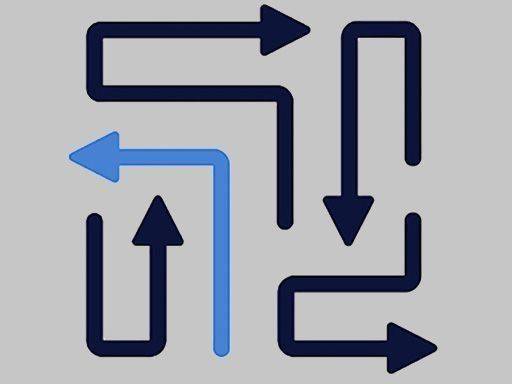
This game presents a grid of square tiles, each marked with a pathway segment. The player rotates these tiles to align the segments, forming an unbroken route from a designated start point to an exit. The marker travels along the completed path automatically, so success depends entirely on the player's ability to visualize the final layout before making adjustments. This mechanic encourages thoughtful analysis rather than quick reactions.
Progression and Difficulty
Early puzzles use simple arrangements with few tiles, allowing newcomers to grasp the rotation mechanic quickly. As players advance, the grid expands and the pathways become more intricate, requiring deeper foresight. Each level introduces a unique tile configuration, so no two puzzles feel identical. The gradual increase in complexity ensures that players build their spatial reasoning skills naturally without feeling overwhelmed.
Visual Design and Atmosphere
The interface uses bright, distinct colors for the tiles and pathways, making it easy to identify connections at a glance. The clean aesthetic avoids clutter, keeping the focus on the puzzle itself. Subtle visual cues, such as highlighting the start and end points, help players orient themselves. This friendly presentation makes the game approachable for all ages, including younger players who are developing logic skills.
Player Experience and Feedback
Every rotation produces immediate visual feedback, showing how the change affects neighboring tiles. This allows players to experiment freely, learning through trial and error without penalty. The absence of timers or scoring pressure creates a calm environment where players can pause and reflect. This design makes the game suitable for short sessions during a break or longer periods of focused play.


03 Player Comments
Sign in to comment
You must be logged in before posting a review or rating.
No account? Create one
No comments yet. Be the first to comment!