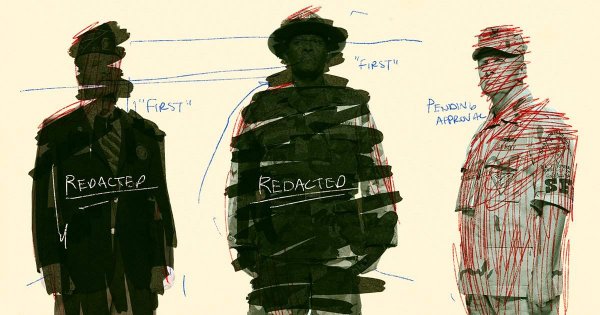
The Pentagon acknowledged on Thursday that automated software, including artificial intelligence, was responsible for the temporary removal of a webpage dedicated to Jackie Robinson, the baseball pioneer and Army veteran. The admission came after public criticism over the deletion, which occurred as part of a broader initiative to strip diversity-related material from official military channels.
In a video posted on X, Pentagon press secretary Sean Parnell said that “because of the realities of AI tools and other software, some important content was incorrectly pulled offline to be reviewed.” He stressed that “history is not DEI” and vowed to restore any content that was mistakenly or maliciously removed.
The controversy began on Wednesday when users discovered that a biographical page about Robinson, who broke Major League Baseball's color barrier in 1947 and served in the Army during World War II, returned a “Page Not Found” error. The URL contained the term “DEI,” linking the removal to President Donald Trump's executive order directing the Department of Defense to eliminate diversity, equity, and inclusion initiatives.
Social media erupted in protest, prompting a response from John Ullyot, a Pentagon public affairs official, who issued a statement that did not clarify whether the removal was an error but instead criticized “Woke cultural Marxism.” The backlash intensified, and by Thursday, Ullyot was removed from his position, according to the Washington Post. The Robinson article has since been restored.
AI's Expanding Role in Federal Operations
This episode highlights the Trump administration's increasing reliance on artificial intelligence to execute rapid changes across the federal government. Staff from Elon Musk's Department of Government Efficiency (DOGE) have reportedly fed sensitive employee and financial data into AI models, and used another AI tool to analyze emails that Musk demanded from federal employees to justify their jobs. DOGE is also developing a custom AI chatbot to review government contracts and expenditures.
Additionally, the U.S. Army has deployed an AI model called “CamoGPT” to scan and remove DEI references from training materials. These automated systems can operate on a massive scale, enabling swift content removal, but they also risk overreach, as seen in the Robinson case.
Critics argue that using AI in this context can shield officials from accountability when removals go too far, since the technology acts broadly and automatically. The Robinson incident, however, drew enough attention to force a correction, underscoring the potential for public oversight to counterbalance automated processes.
As the administration continues to integrate AI into federal operations, the balance between efficiency and accuracy remains a point of contention, with the Pentagon's latest explanation serving as a case study in the unintended consequences of automated content moderation.









Comments
Sign in to leave a comment
No account? Create one
No comments yet.