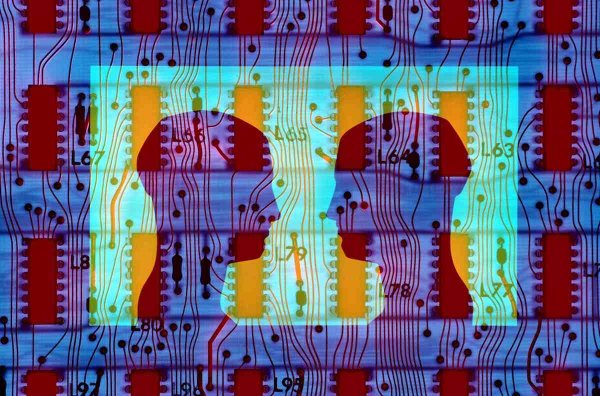
Ray Kurzweil, a computer scientist and director of engineering at Google, used his appearance at the 2018 South by Southwest Conference in Austin, Texas, to reiterate a timeline for a future where machines outthink their creators. The Singularity, the point at which artificial intelligence surpasses human cognitive ability, will arrive by 2045, he said. Six years earlier, in 2029, AI will have reached human-level intelligence, a milestone he ties to passing a valid Turing test.
Kurzweil's track record lends weight to his forecasts. Motherboard has called him a prophet of both techno-doom and techno-salvation, and an analysis of his past predictions shows an 86 percent accuracy rate. Among the hits: the collapse of the Soviet Union, the rise of the internet, and computers beating humans at chess. His latest claims, however, extend far beyond incremental advances.
His vision for the coming decades includes a radical transformation of work and society. Kurzweil predicts that virtual reality will advance to the point where physical offices become obsolete. Commutes would shrink to the time it takes to put on a headset. As Inverse notes, this shift could drive deurbanization, as people no longer need to cluster in cities for employment. The same article suggests that such decentralization might reduce opportunities for terrorist attacks, and blockchain technology would further push power away from centralized institutions.
From Biology to Hardware
Kurzweil's most striking predictions concern the human body itself. He foresees a future where nanobots and brain-to-computer interfaces, such as Elon Musk's Neuralink or Bryan Johnson's Kernel, enable us to replace biological tissue with more durable hardware. By the early 2030s, he says, it will be possible to copy a human consciousness onto an electronic medium. As Inverse puts it, that would mean no more flesh, blood, or bones—just a scan of your brain on a machine, allowing humans to take any form, from a box to a bird.
The ultimate implication is the end of death as we know it. If consciousness can be stored digitally, it would no longer depend on fragile biology, theoretically enabling humans to live forever. Kurzweil does not shy away from the enormity of this claim, nor from the mixed feelings it evokes.
Not all of his predictions are so far-reaching. He expects truly ubiquitous WiFi to become a reality, a prospect bolstered by Elon Musk's plan to beam internet access from space. He also believes many diseases that currently plague humanity will be eradicated by the 2020s, a goal that seems increasingly plausible given the pace of medical breakthroughs.
Kurzweil's future is equal parts exciting, daunting, and terrifying. Whether his batting average holds remains to be seen, but his projections continue to shape conversations about technology and its role in human evolution.
Comments
Sign in to leave a comment
No account? Create one
No comments yet.