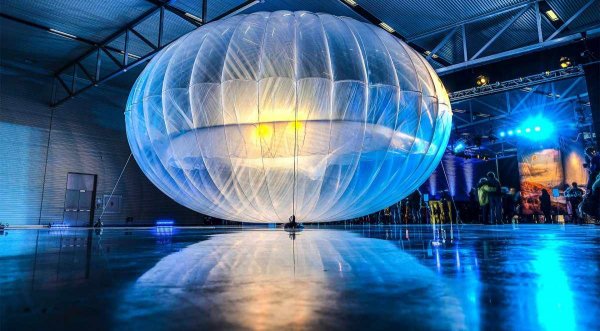
Google's ambitious effort to beam internet access from high-altitude balloons is nearing a key milestone, with the company projecting it could have a continuous ring of balloons circling part of the globe within the next year. The project, known as Loon, has been in development since its public unveiling in June 2013, and recent progress suggests the technology may soon move from testing to practical deployment.
Each balloon, inflated with helium, carries a suite of equipment including two radio transceivers for data transmission and reception, a backup radio, a flight computer, GPS tracking, an altitude control system, and solar panels to power the electronics. This setup allows each balloon to deliver internet speeds of up to 10 megabits per second to ground-based antennas within a coverage area of 40 kilometers in diameter.
To create a continuous string around the world, Google estimates it will need approximately 300 balloons operating simultaneously. The company says it is on track to have that first ring in place sometime next year, though the initial deployment will be limited to a relatively small part of the Southern Hemisphere. If the trial proves successful, the next step would be launching the first set of beta commercial customers, marking a shift from experimental phase to potential service offering.
How the Balloons Operate
The balloons are launched using an automated crane at intervals of 15 minutes, a process designed to streamline deployment and maintain the fleet. Once aloft, they can remain airborne for up to 187 days, thanks to their solar-powered systems and altitude control that allows them to ride stratospheric winds. The ability to stay aloft for extended periods is crucial for maintaining a stable ring of coverage, as balloons need to be replaced or repositioned as they drift.
The project's goal is to provide connectivity to areas where traditional infrastructure is lacking or impractical. By floating in the stratosphere, the balloons can serve as floating cell towers, sending signals to ground antennas that can then distribute the internet to local users. The 40-kilometer ground footprint per balloon means that a ring of 300 balloons could cover a substantial but still limited geographic area, which is why the initial deployment is targeted at a specific region rather than global coverage.
Google has not disclosed the exact location of the planned ring, but the Southern Hemisphere focus suggests an area where internet penetration is low and geographic challenges make ground-based expansion difficult. The beta commercial phase, if reached, would be a significant step toward turning the project from a technological experiment into a viable service, potentially offering an alternative to traditional internet provision in underserved regions.
While the timeline remains tentative, the progress marks a notable advance from the early days of the project, when balloons were tested in limited trials. The company's confidence in achieving the 300-balloon ring next year indicates that the technical hurdles, such as balloon longevity and reliable data transmission, are being overcome. However, the project still faces challenges, including regulatory approvals for operating in different countries' airspace and ensuring the balloons do not interfere with aviation or other communications.
For now, the focus is on completing the ring and demonstrating the technology's reliability. If successful, Project Loon could provide a blueprint for delivering internet to remote and rural populations, a goal that has attracted interest from governments and organizations worldwide. The next year will be critical in determining whether the balloons can truly circle the Earth and bring connectivity to those who lack it.









Comments
Sign in to leave a comment
No account? Create one
No comments yet.