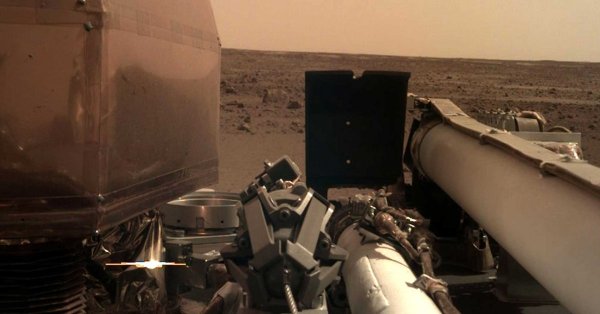
NASA's InSight lander has successfully unfolded its solar panels on the Martian surface, a crucial step that ensures the spacecraft has enough energy to begin its scientific mission. The deployment occurred at approximately 8:30 p.m. EST on Monday, according to the Jet Propulsion Laboratory (JPL), which manages the mission.
The lander's arrival on Mars was anything but routine. After a seven-month journey through space, InSight endured what NASA engineers call "seven minutes of terror" — a high-risk descent that saw the spacecraft plunge through the thin Martian atmosphere at 12,300 mph (19,800 km/h), heating up like a meteorite before touching down safely.
Now that it has power, InSight is poised to begin a new phase of operations. On a clear Martian day, its twin solar arrays — each measuring 7 feet (2.2 meters) across — are expected to generate between 600 and 700 watts of electricity, roughly the amount needed to run a household blender. That power will drive the lander's actuators and onboard instruments.
Mission lead Tom Hoffman of JPL acknowledged the team's relief and anticipation. "It's been a long day for the team," he said. "But tomorrow begins an exciting new chapter for InSight: surface operations and the beginning of the instrument deployment phase."
InSight has already sent back a selfie taken with one of its cameras, offering a first look at its new home. In the coming days, the lander's robotic arm will extend and use a camera mounted on its end to photograph the surrounding terrain. Engineers on Earth will analyze those images to identify a suitable location to deploy the mission's scientific instruments.
Preparing for the Science Phase
That deployment process will not be quick. JPL officials estimate it will take two to three months before the instruments are fully positioned and ready to transmit data back to Earth. Until then, the lander will continue to rely on its solar power to stay operational.
InSight's mission is designed to study the deep interior of Mars, including its crust, mantle, and core, using a seismometer and a heat flow probe. The data it gathers could help scientists better understand how rocky planets — including Earth — formed and evolved.
The successful power-up marks a key milestone for the mission, but the real work lies ahead. As the lander basks in the Martian sunlight, the team behind it is gearing up for the careful, methodical process of bringing its instruments online.







Comments
Sign in to leave a comment
No account? Create one
No comments yet.