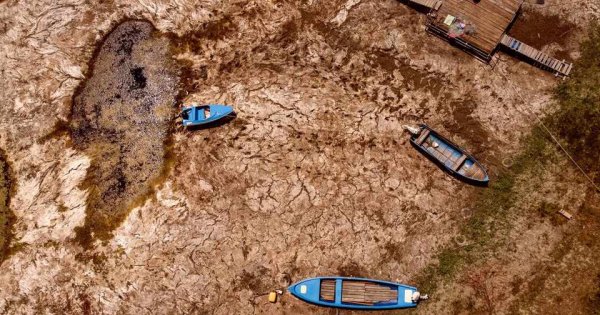
Record heat across Europe has shrunk the Danube River to levels so low that a nearly 1,700-year-old Roman bridge has emerged from the water near the Bulgarian shore, giving archaeologists an unexpected window into the past.
The structure, known as the Constantine Bridge, was opened in 328 AD during the reign of Roman Emperor Constantine the Great, according to Reuters. The river's flow through Bulgaria has slowed to a trickle, exposing the bridge's foundations for the first time in centuries. Although the bridge was likely destroyed within a few decades of its completion, historians consider it one of the longest bridges engineered by the Roman Empire.
Pavel Popov, an archaeologist at the Pleven Regional Historical Museum in Bulgaria, told Reuters that the drought, while disruptive, has created a rare scientific opportunity. "For archaeologists, these moments are extremely valuable because nature briefly reveals an object that is hidden beneath the Danube for most of the time," he said. "It gives us a rare opportunity to observe, document and study it in its real environment."
Local researchers have already used drones to survey the exposed ruins, taking advantage of the low water to map the bridge's footprint and assess the condition of its foundation materials.
The Danube is not the only European waterway affected. Satellite images from the European Union's Copernicus Sentinel-2 program show the extent of the drought across the continent, with major rivers visibly desiccated. The receding waters have also revealed other artifacts, including a mammoth tusk found near the Bulgarian village of Ryahovo and a sunken Nazi warship spotted off the Croatian town of Opatovac.
Why the Low Water Levels Matter
The drought, tied to a record heatwave, has disrupted shipping, agriculture and ecosystems along the Danube. Yet for archaeologists, the exposure of ancient structures offers a fleeting chance to study history that is normally underwater. Popov emphasized that these moments are brief, as water levels may rise again, submerging the sites once more.
The discovery underscores the dual nature of extreme weather: while it poses challenges to modern life, it can also unlock hidden chapters of the past. As the heatwave persists, researchers are working quickly to document the findings before the river reclaims them.








Comments
Sign in to leave a comment
No account? Create one
No comments yet.