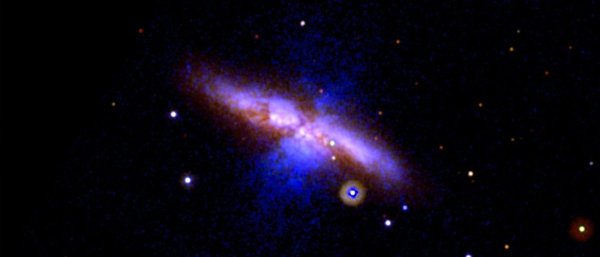
The accelerating expansion of the universe is set to erase the very evidence that allowed humanity to reconstruct the story of cosmic origins, a prospect that will leave future civilizations without the means to understand how it all began. According to NASA, the relentless acceleration will stretch the fabric of spacetime so that the electromagnetic radiation—light—that carries the imprint of the Big Bang will become undetectable. This means that within a trillion years, the observational clues that led to the Big Bang theory will have vanished, making it impossible for any subsequent intelligent species to piece together the universe's formative history.
Earth, however, occupies a privileged position in this cosmic timeline. The planet is part of the first 8% of habitable worlds to form in the universe, giving current inhabitants a front-row seat to the remnants of the Big Bang. The cosmic microwave background radiation—a faint glow left over from the universe's fiery birth—remains visible today, allowing scientists to probe the fundamental physics that set the stage for galaxies, stars, and life. This early vantage point is a stroke of cosmic luck, as the window for such observation is finite.
Why the Evidence Will Fade
The culprit is the universe's own expansion, which has been accelerating since the Big Bang. As space stretches, the wavelengths of light traveling through it are also stretched, a phenomenon known as cosmological redshift. Over time, this stretching will push the radiation from the Big Bang to wavelengths so long that they fall outside the detectable range of any conceivable instrument. The cosmic microwave background, which today is a relic at microwave frequencies, will eventually shift into the radio and then beyond, becoming indistinguishable from the general darkness of space.
NASA's explanation points to a simple but profound consequence: future astronomers, no matter how advanced, will have no direct evidence that the universe had a beginning. They will look out at a cosmos that appears static and eternal, with no trace of the explosive origin that set everything in motion. The very concept of a Big Bang might remain a theoretical possibility, but without observational proof, it would be relegated to the realm of speculation.
A Darker Cosmos Ahead
While a trillion years may seem an eternity, it is a mere blink in the cosmic calendar. The last stars in the universe are not expected to burn out until 100 trillion years from now, meaning that countless civilizations could rise and fall in the interim. Yet, by the time those later societies emerge, the universe will be a vastly different place—darker, emptier, and more mysterious. The galaxies that are visible today will have drifted beyond the cosmic horizon, their light forever out of reach. The night sky, once a tapestry of stars, will be a sparse and lonely expanse.
This scenario raises a sobering thought: the scientific achievements of today may be a unique and fleeting opportunity. The knowledge we are gathering about the universe's origins is not just a triumph of human curiosity but also a temporal gift. Future minds, if they ever ponder the same questions, will face a cosmos that offers no answers—only silence.
For now, humanity can take solace in being early to the cosmic party. The ability to study the Big Bang and trace the evolution of the universe is a privilege that will not be repeated. As the expansion continues its inexorable march, the evidence will slip away, leaving behind a universe that is as enigmatic as it is vast.





Comments
Sign in to leave a comment
No account? Create one
No comments yet.