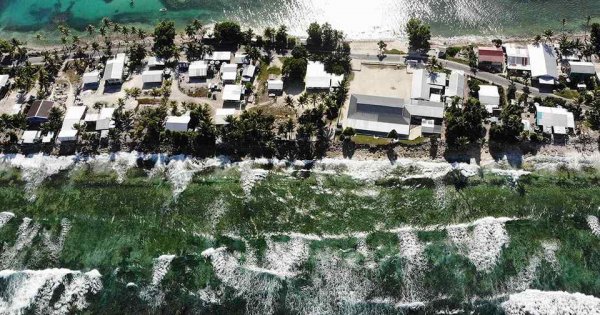
The Pacific island nation of Tuvalu, whose highest points average just 6.5 feet above sea level, is moving forward with a planned evacuation of its entire population as rising seas and intensifying storms make long-term habitation untenable. The country, home to roughly 11,000 people, signed a bilateral agreement with Australia in 2023 that establishes a climate visa program, allowing 280 residents per year to resettle permanently on the Australian continent.
The demand for these visas has vastly outstripped supply. The Australian High Commission in Tuvalu reported this week that it received 8,750 registrations for the ballot, a figure that includes family members of primary applicants. The lottery-based system underscores the mounting pressure on Tuvaluans to secure a future beyond their sinking homeland.
Why Relocation Is Becoming Urgent
Tuvalu’s vulnerability is not hypothetical. With an average elevation of only 6.5 feet, the nation faces near-certain devastation from projected sea level rise. Warmer ocean temperatures are also fueling fiercer storms, which can bring catastrophic flooding and erosion to the low-lying atolls. The combination of gradual inundation and sudden extreme weather events has made the island’s long-term viability increasingly doubtful.
The scale of potential migration is significant. According to Jane McAdam, a research fellow at UNSW Sydney, when combined with other Pacific migration pathways to Australia and New Zealand, nearly 4 percent of Tuvalu’s population could leave each year. Writing in The Conversation, McAdam noted that within a decade, close to 40 percent of the population could have relocated, though some may return or travel back and forth.
Beyond physical relocation, Tuvalu has taken steps to preserve its cultural identity. The government has initiated a project to 3D-scan its islands, creating a digital record of its landforms and heritage sites in the event they are lost to the ocean.
A Regional and Global Crisis
Tuvalu is not alone in facing this existential threat. According to the UN Human Development Program, increased coastal flooding could endanger more than 70 million people worldwide. By 2050, hundreds of densely populated cities are expected to face elevated flood risks due to climate change. The UN also reports that rising sea levels are already affecting one billion people globally.
The human toll is echoed in official statements. During a September address to the UN’s Intergovernmental Panel on Climate Change, Tuvalu’s Prime Minister Feleti Teo framed the crisis in stark terms: “The existential threat we face is not of our making, but it will remake us.”
For Tuvalu, the climate visa program offers a lifeline, but it is a partial one. With 280 slots per year and thousands of applicants, the program cannot immediately accommodate everyone. The gap between demand and capacity highlights the broader challenge facing small island nations as they negotiate their futures in a warming world.
As the ballot results are processed and the first cohorts prepare to move, Tuvalu’s experience serves as a concrete example of how climate change is reshaping migration patterns and forcing governments to plan for the unthinkable: the managed departure of an entire nation.







Comments
Sign in to leave a comment
No account? Create one
No comments yet.