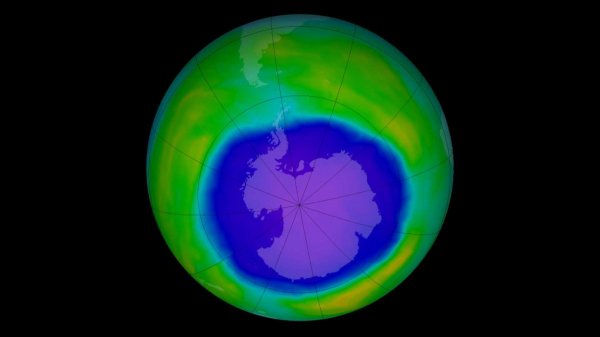
Three decades after the world united to repair the ozone layer, new research shows that recovery is not proceeding as expected in the regions where most people live. A study published in the journal Atmospheric Chemistry and Physics reveals that ozone concentrations in the middle and lower latitudes have actually decreased over the past two decades, a trend that current atmospheric models did not predict.
The findings, led by William Bell, an atmospheric physicist at ETH Zurich and PMOD/WRC Davos in Switzerland, indicate that the ozone layer in these areas is thinner today than it was 20 years ago. Bell told Futurism that this is a significant departure from what modeling studies suggested should be happening in the lower stratosphere.
The unexpected decline could signal a flaw in how atmospheric circulation models are designed, or it might be the result of harmful substances like chlorine and bromine that were not regulated under the Montreal Protocol. These so-called "very short-lived substances" were previously ignored because they were not thought to survive long enough to reach the ozone layer. Bell noted that these substances are increasing and are not included in current models, adding, "It's not that the models are wrong. It's that the scenarios we've set up aren't correct. We would have to update these."
Why the Ozone Layer Still Matters
Despite the concerning findings, the study's authors emphasize that the Montreal Protocol has been a resounding success. By 2030, the treaty is expected to prevent one million cases of skin cancer annually. Additionally, from 1989 to 2013, the protocol's measures helped avoid 135 billion tonnes of climate-warming emissions, equivalent to about 5.6 billion tonnes of CO2 per year.
The new research underscores the need for continued vigilance. Bell stressed the importance of ongoing monitoring of both the ozone layer and the climate system to ensure that targets are met and to identify emerging threats. "We really have to continue monitoring both the ozone layer and the climate system in general to update our models," he said.
The findings also highlight the potential role of international climate agreements, such as the Paris Climate Agreement, in addressing these new challenges. As scientists work to understand the causes of the ozone decline, the study serves as a reminder that environmental protection requires constant adaptation and scientific inquiry.








Comments
Sign in to leave a comment
No account? Create one
No comments yet.