With global temperatures on track to exceed the 2-degree Celsius threshold that scientists warn could trigger irreversible damage, a growing number of researchers are calling for serious consideration of geoengineering—a suite of large-scale interventions designed to cool the planet. But the proposals, which range from fertilizing the oceans with iron to spraying reflective particles into the stratosphere, remain deeply divisive, with experts split over their safety, effectiveness, and the political feasibility of coordinating such efforts across nations.
The urgency stems from a stark reality: despite decades of climate negotiations, greenhouse gas emissions continue to rise, and the window to avert the worst impacts is closing. According to studies cited by climate scientists, the likelihood of keeping warming below 2°C (3.6°F) is slim, raising the specter of severe droughts, more frequent extreme weather, catastrophic sea-level rise, and widespread food and water insecurity.
Geoengineering, once a fringe topic, has moved into the mainstream of climate discourse. Proponents argue that, in a crisis, these technologies could provide a last-resort brake on warming. “Let’s say that global warming continues to progress, and maybe the tropics get too hot to grow most crops, so there are widespread crop failures and massive famines,” said Ken Caldeira, a climate scientist at Stanford University. “Geoengineering would be the only known way to cause the planet to start cooling off within socially-relevant timescales.”
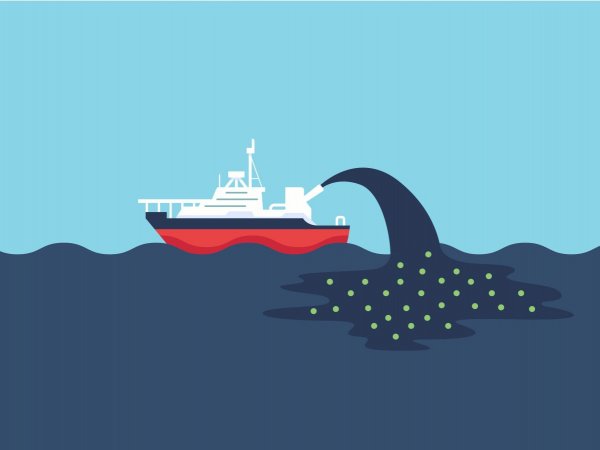
One of the earliest and most controversial ideas is iron fertilization, proposed nearly three decades ago by oceanographer John Martin, who famously quipped, “Give me half a tanker of iron, and I will give you an ice age.” The concept is simple: dump iron sulfate into the ocean to stimulate phytoplankton blooms, which absorb carbon dioxide. But studies have shown that the approach is fraught with problems. When phytoplankton die, their decomposition can deplete oxygen in the water, creating “dead zones” that devastate marine life. The Gulf of Mexico already experiences such zones, covering up to 8,700 square miles, largely due to agricultural runoff. Moreover, even the most optimistic models suggest iron fertilization would have a negligible impact on global CO2 levels.
In 2008, the United Nations’ Center for Biological Diversity issued a moratorium on large-scale iron fertilization experiments, following an agreement by an ocean-governing body that such operations were not justified given the current state of knowledge. Yet the idea persists, driven by interest from governments and even illegal dumping attempts, frustrating marine scientists who have repeatedly called for an end to the practice.
Another leading proposal is stratospheric aerosol injection, which would release reflective particles into the upper atmosphere to mimic the cooling effect of volcanic eruptions. A recent modeling study in the journal Nature found that such injections could reduce North Atlantic hurricanes but would also cause severe droughts in sub-Saharan Africa, depending on where the particles are released. The study’s lead author, Jim Haywood, a professor at the University of Exeter, described the outcome as a “winners-and-losers kind of scenario,” emphasizing that no single nation should control the planet’s fate.
Governance and the “Termination Effect”
Even if geoengineering were to work, it would require sustained, decades-long commitment. Haywood warns of a “termination effect”: if injections were stopped abruptly, the planet could experience a rapid rebound of accumulated warming within about five years. This means that any geoengineering scheme based on reflection would have to be maintained indefinitely, while also cutting emissions—a dual challenge that many doubt is politically feasible.
Critics argue that geoengineering offers a dangerous distraction from the fundamental need to reduce fossil fuel use. “These plans ignore the question as to why there’s not enough political will to have done more to tackle climate change until now, and they, in turn, serve to justify the inaction,” said Silvia Ribeiro, Latin America Director of the ETC Group, which monitors the impact of technology on the poor.
The scientific community itself is wary. One NASA scientist declined to be interviewed, citing the sensitivity of the topic, while a marine researcher, speaking anonymously, expressed frustration with proponents motivated by profit. “We know what the problem is, and what the solution is,” the researcher said, referring to emissions reduction.
Ultimately, the debate over geoengineering underscores a deeper issue: the human capacity to collaborate on a global scale. Even if a miracle technology were to emerge, its implementation would require unprecedented international consensus. As Caldeira and others note, the greatest challenge may not be scientific but political—a problem that has plagued climate action for decades.









Comments
Sign in to leave a comment
No account? Create one
No comments yet.