
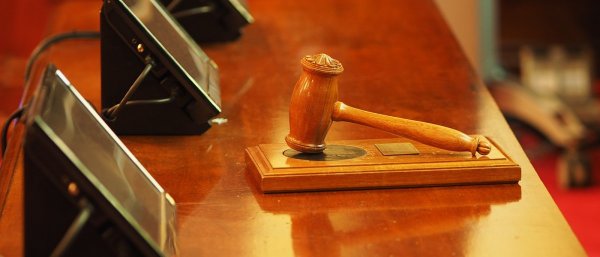
One hundred years after a Tennessee teacher was convicted for explaining Darwin's theory to high school students, the classroom remains a battleground over how life developed on Earth. The 1925 trial of John Scopes, which lasted eight days and ended in a guilty verdict delivered in under ten minutes, became a defining moment for American science education. Yet the legal victory for evolution supporters did not settle the cultural conflict, and today's science teachers continue to navigate pressures that their predecessors faced decades ago.
Scopes was arrested and tried under the Butler Act, a Tennessee law that made it illegal to teach evolution in public schools. The American Civil Liberties Union, which helped defend Scopes, gained national prominence through the case. Although the conviction was later overturned on a technicality, the law remained in effect until 1967, when another teacher, Gary L. Scott, challenged its constitutionality after being fired for teaching evolution in Jacksboro, Tennessee. The repeal in Tennessee prompted other states with similar bans to follow suit, but the end of legal prohibitions did not end the controversy.
From Bans to Alternatives
In the decades since, opponents of evolution have shifted tactics, pushing for the inclusion of creationism, scientific creationism, and intelligent design alongside evolution in science classrooms. While no state has successfully mandated these alternatives, three states have passed laws since 2004 that allow teachers to present evolution as scientifically controversial—a framing that many science educators argue misrepresents the evidence.
The scientific community's position is clear: a 2014 Pew Research Center survey found that 98 percent of scientists accept evolution. However, public opinion lags significantly. The same survey showed that one-third of Americans reject evolution outright, and more than half of those who reject it believe scientists themselves are divided on the issue. Even among the general public, nearly 30 percent perceive disagreement among scientists, a perception that persists despite the data.
Classroom Realities and Misrepresentation
The gap between scientific consensus and classroom practice is striking. A 2007 report found that 1 in 8 public high school biology teachers presented creationism as scientifically credible, and 6 in 10 taught evolution in a way that undermined its scientific foundation. The National Science Teachers Association (NSTA) has explicitly stated that it does not condone teaching alternatives to evolution or presenting evolution as scientifically dubious, calling such approaches a “twisting and abusing core pedagogical principles.”
This misrepresentation has practical consequences. Students who receive an inaccurate picture of evolution may be ill-prepared for college science courses, STEM careers, or simply for understanding the scientific advancements that shape modern life. The NSTA's concern is not merely academic; it reflects a broader worry that undermining evolution education weakens science literacy overall.
Religious and Community Pressures
The pushback against evolution has historically been driven by certain religious groups, including major Evangelical Protestant denominations, Jehovah's Witnesses, and the Mormon church. The Catholic Church, by contrast, does not reject evolution, and Pew Research data indicates that 31 percent of Catholics accept it. Despite this, community pressure remains a real force: in 2007, 1 in 5 U.S. high school science teachers reported facing backlash for teaching evolution.
As the century mark of the Scopes trial approaches, the debate shows no signs of fading. The legal battles have largely been won, but the cultural and educational challenges persist. For scientists and educators, the task may be not only to convince the public that evolution is true but also to make clear that the scientific community itself stands firmly behind it.









Comments
Sign in to leave a comment
No account? Create one
No comments yet.