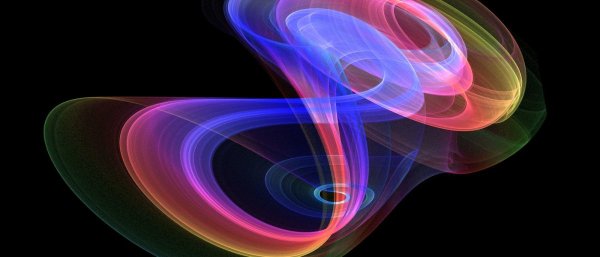
For over a century, physicists have sought a single framework that could explain all fundamental forces and particles in the universe. This ambitious goal, often called a theory of everything, has driven research from Einstein's general relativity to the quantum mechanics of the early 20th century. Yet, it was not until the advent of string theory in the late 1960s that a viable candidate emerged, offering a new perspective on the building blocks of reality.
String theory posits that the most basic constituents of matter are not point-like particles but tiny, vibrating loops of energy. This idea, popularized by physicist Brian Greene in a 2005 TED talk, suggests that the variety of particles we observe—from electrons to quarks—are merely different vibrational modes of these fundamental strings. This concept provides a potential bridge between the seemingly incompatible worlds of quantum mechanics and gravity, a challenge that has stumped scientists for decades.
The origins of string theory trace back to 1968, building on earlier attempts at a unified theory that began in the early 1900s. Despite its mathematical elegance, experimental verification remains out of reach. However, theoretical physicists like Edward Witten continue to push the boundaries, exploring the theory's implications for our understanding of space, time, and matter.
In an interview with NOVA, Witten described string theory as "an attempt at a deeper description of nature by thinking of an elementary particle not as a little point but as a little loop of vibrating string." He drew an analogy to music, noting that a string's vibrations produce different tones, much like a piano or violin, which gives music its richness. In string theory, the unity of forces and particles arises because they all stem from different vibrations of the same fundamental string.
Witten's most notable contribution is M-theory, introduced in the 1990s, which unifies the five distinct string theories (type I, type IIA, type IIB, SO(32) heterotic, and E8xE8 heterotic). Initially, these were thought to be separate and mutually exclusive, but Witten proposed dualities that connect them through particle interactions, suggesting they are different manifestations of a single underlying theory.
While some view string theory as a fascinating but unproven idea, its potential impact extends far beyond theoretical physics. The history of science shows that fundamental discoveries often lead to unexpected practical applications. For instance, Newton's law of gravity, once a purely theoretical revelation, eventually enabled flight, space exploration, and modern medicine. Similarly, advancements in string theory could one day reshape our technological landscape, even if we cannot yet predict how.
Currently, M-theory offers valuable insights into higher-dimensional objects, such as 2- and 5-dimensional branes, and helps clarify the dualities that unify our understanding of string theory. While it may not yet provide a definitive answer to the unified equation, the ongoing research continues to expand the frontiers of physics, promising new knowledge that could one day transform our world.






Comments
Sign in to leave a comment
No account? Create one
No comments yet.